The four launch factions are not four skins over one army. Each has a different economy, a different way of holding ground and a different failure mode. This comparison is built from the developer’s own playstyle notes, not from pre-launch tier testing.
At a glance
| Faction | Identity | Strength | Watch out for | Difficulty |
|---|---|---|---|---|
| Space Marines | Elite combined arms | Wins individual fights; durable squads | Expensive; cannot be everywhere | Moderate |
| Orks | Pressure and numbers | Cheap, fast, free Stratagems | Weak individual ranged units; fragile buildings | Forgiving |
| Necrons | Attrition and resilience | Self-repair, Resurrection Galleries, Power Matrix | Slow; must fight inside their bonuses | Demanding |
| Adeptus Mechanicus | Network and firepower | Noosphere upgrades; powerful late game | Relay-dependent; vulnerable to melee | Demanding |
Space Marines: the elite answer
Space Marines are the smallest, most expensive and most individually capable armies. The official advice is to use that early advantage to harass, upgrade squads and keep them alive with on-field reinforcements. Reserves and the Thunderhawk Relay let a Marine player respond to threats without marching everything across the map.
The counter is to force multiple engagements. Marines cannot be everywhere, and every loss is expensive. Denying Power is especially effective because their units are Power-hungry. If you play Marines, your job is to make every fight a favourable one and avoid a war of attrition you cannot replace.
Orks: the pressure answer
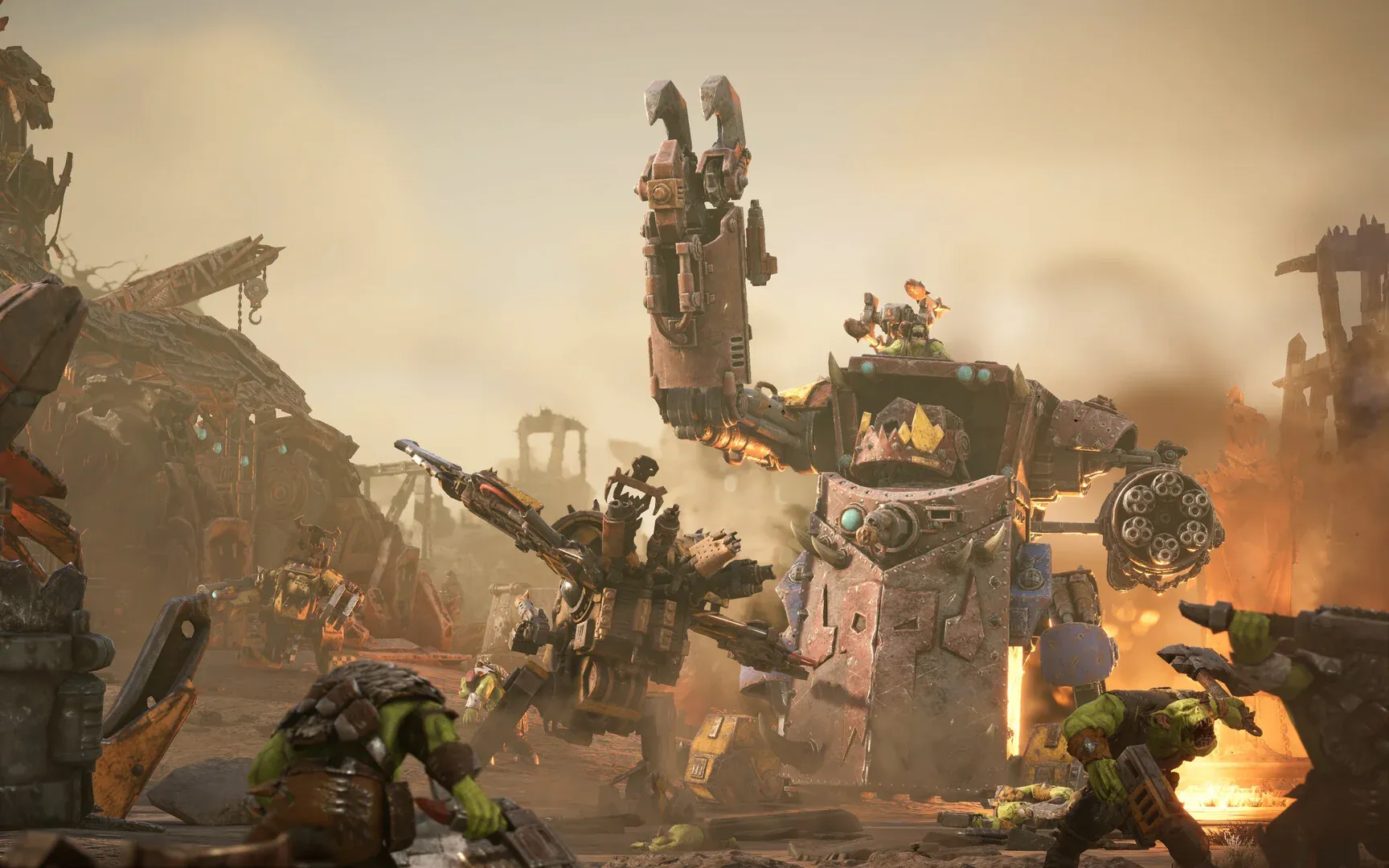
Orks are the easiest faction to understand and the hardest to stop once they have momentum. Units and buildings are cheap, infantry can put structures up almost anywhere, and Stratagems are free. The official advice is to spread bases, build multiple strongholds and keep the pressure on.
Their weakness is quality. Individual Ork units, especially ranged units, are not their strength, and their buildings are armed but fragile. Beat them by chipping bases, punishing reckless advances and denying the Waaagh! time to snowball. If you play Orks, accept losses as a cost of doing business and keep the next attack moving.
Necrons: the attrition answer
Necrons are slow, resilient and built to outlast. Resurrection Galleries recover losses, the Power Matrix rewards fighting on prepared ground, and translocation offsets their movement speed later in the game. Their ranged units are powerful, but their advance is deliberate.
The counter is to refuse the fight they want. Attack outside the Power Matrix, strike vulnerable positions elsewhere and finish units outright rather than wounding them. If you play Necrons, your job is to make the opponent come to you — or to make their attempt to avoid you cost more than the fight would have.
Adeptus Mechanicus: the network answer
The Adeptus Mechanicus is the most infrastructure-dependent faction. A strong Noosphere Network early, extended to key resource points, unlocks research and upgrades. The faction fields cheap Skitarii and powerful late-game machines, including the Knight Castellan, but its relays are a liability.
The official counter is explicit: destroy Cogitator Relays, deny the network, and do not try to outproduce them. Their firing line is superior, so close the distance with melee units. If you play Mechanicus, protect the network and keep enemy melee away from the guns.
Full Adeptus Mechanicus dossier
Blood Ravens vs Dark Angels
The Space Marines contain two playable Chapters in the campaign. The Blood Ravens are the returning Chapter, led by Captain Cyrus and Chief Librarian Jonah Orion, with flexible strategic combat and a stealth/ranged commander. The Dark Angels are the reinforcement Chapter, led by Company Master Astoran and Chaplain Ezrael, with the Deathwing’s heavy frontline and the Ravenwing’s fast strikes.
The campaign asks you to choose between them for the final act. The Dark Angels also bring Lion El’Jonson as a playable Primarch at the climax. If you want the heavier, more deliberate army, choose the Dark Angels; if you want the story of the returning Chapter, stay with the Blood Ravens.
Blood Ravens
Knowledge is power. Guard it well.
Open dossier → CHAPTER 02Dark Angels
Shock and awe. Then silence.
Open dossier →How to choose
If you are new to RTS games, start with Orks. If you want the classic elite-army fantasy, pick Space Marines. If you enjoy attrition and deliberate pushes, pick Necrons. If you like planning a network and protecting infrastructure, pick Adeptus Mechanicus.
Do not choose based on which faction has the “best” units; the launch balance is not public. Choose the army whose failure mode sounds tolerable, because you will spend more time managing that weakness than admiring its strength. The faction finder turns the official playstyles into a short recommendation.